
macOS Golden Gate highlights and more | AppleDsign
Apple Draws a Line Under the Intel Era With macOS 27 Golden Gate
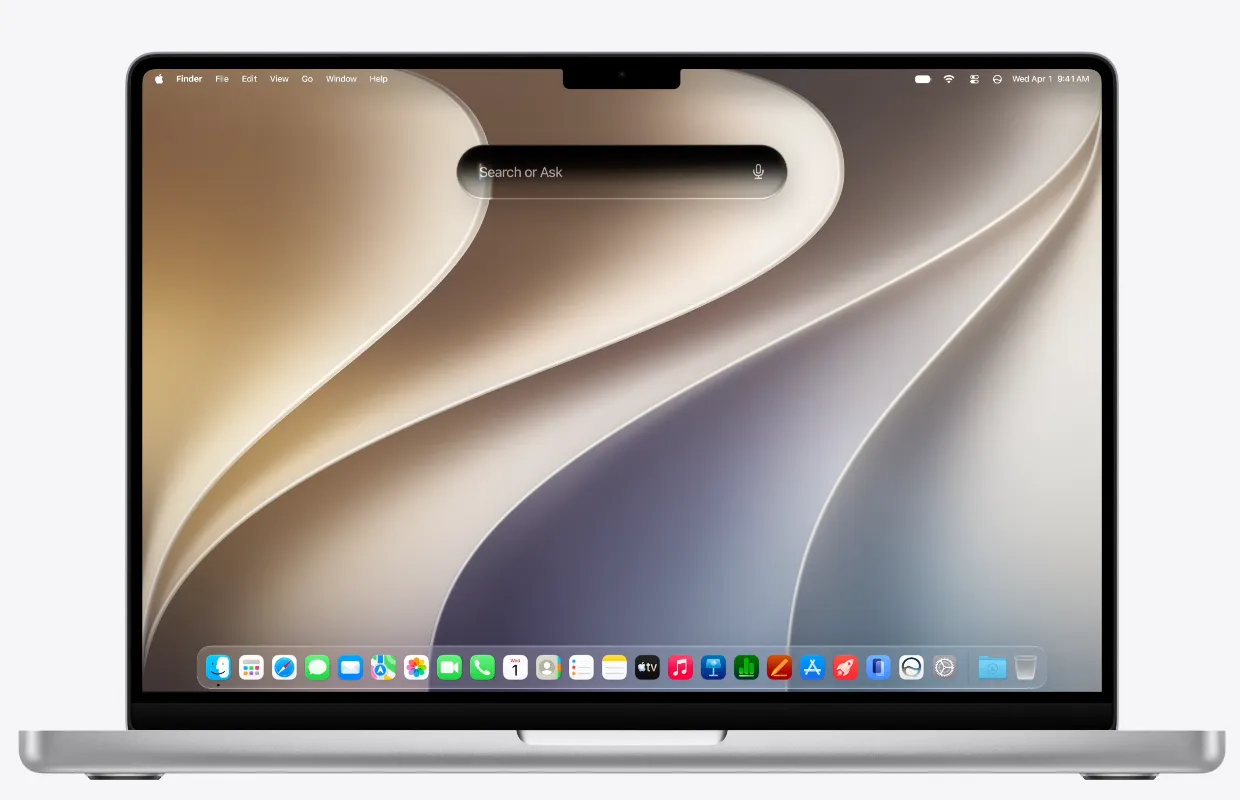
Apple's newest Mac operating system isn't trying to reinvent the desktop. Instead, macOS 27 Golden Gate represents a major shift in Apple's long-term strategy, focusing on artificial intelligence, Apple Silicon optimization, and a cleaner user experience rather than introducing dramatic visual changes.
A New Chapter Begins for Mac
For years, Apple has maintained support for both Intel and Apple Silicon Macs while gradually transitioning users to its own processors. With Golden Gate, that transition officially reaches its final stage.
The new operating system no longer supports Intel-based Macs, making it the first modern macOS release built exclusively for Apple Silicon devices. Macs powered by M1, M2, M3, and M4 chips remain supported, while older Intel machines are left behind.
This decision allows Apple to focus future development on a single architecture, opening the door for deeper hardware and software integration.
Siri Takes Center Stage
One of the biggest upgrades in Golden Gate is Apple's renewed focus on Siri.
The assistant now offers significantly deeper system awareness, allowing it to understand information across documents, apps, emails, and on-screen content. Apple is positioning Siri as a productivity tool rather than simply a voice assistant, with stronger conversational capabilities and improved context recognition.
The changes are part of Apple's broader effort to make Apple Intelligence a core part of the Mac experience.
Apple Intelligence Expands Across macOS
While macOS Tahoe introduced the first generation of Apple Intelligence features, Golden Gate pushes the platform much further.
AI-powered writing assistance, smarter search functions, workflow automation, and enhanced content organization are now more deeply integrated throughout the operating system. Applications such as Mail, Photos, Safari, Calendar, and Shortcuts gain additional AI-driven functionality designed to reduce repetitive tasks and improve productivity.
Rather than launching an entirely new AI platform, Apple appears to be strengthening the capabilities it introduced over the past year.
Liquid Glass Gets a Second Pass
The visual identity introduced in macOS Tahoe remains intact, but Apple has refined many of the elements that received criticism from users.
Golden Gate improves readability, simplifies menu layouts, adjusts transparency behavior, and introduces greater control over the Liquid Glass effect. Sidebars have been redesigned, interface consistency has been improved, and many visual distractions have been removed.
The result is an interface that feels more polished without abandoning the design language Apple introduced in Tahoe.
Performance Improvements Behind the Scenes
Although Golden Gate's most visible features revolve around AI and interface refinements, several under-the-hood improvements are also part of the release.
Apple has optimized system search, memory management, application responsiveness, and overall efficiency. Because the operating system no longer needs to account for Intel hardware, engineers can focus entirely on extracting more performance from Apple Silicon.
Many of these improvements may not be immediately noticeable, but they create a stronger foundation for future macOS releases.
Rosetta 2 Approaches the End of the Road
Golden Gate also signals the beginning of the final phase for Rosetta 2, Apple's translation technology that allows Intel applications to run on Apple Silicon Macs.
While support remains available in macOS 27, Apple is increasingly encouraging developers to fully embrace native Apple Silicon software. The industry-wide transition away from Intel applications appears closer than ever.
Conclusion
macOS 27 Golden Gate is less about flashy redesigns and more about preparing the Mac for its next decade. By ending Intel support, expanding Apple Intelligence, enhancing Siri, and refining the Liquid Glass interface, Apple is building a platform designed specifically for the capabilities of Apple Silicon.
For users expecting a dramatic visual overhaul, Golden Gate may appear modest at first glance. However, beneath the surface, it represents one of Apple's most important strategic macOS releases in years - a release that officially closes the Intel chapter and accelerates the company's AI-driven future.

Last updated: Oct 14, 2026