
Apple releases new Mac Studio with M5 Max and M5 Ultra
Apple has introduced its most powerful Mac Studio yet, bringing the M5 Max and all-new M5 Ultra to its compact professional desktop.
The new generation delivers major improvements in AI, graphics, storage and CPU performance, while configurations now scale all the way up to an extraordinary 512GB of unified memory. Apple is positioning the new Mac Studio not only as its ultimate machine for demanding creative workflows, but increasingly as a desktop AI workstation capable of running enormous models entirely on-device.
The Mac Studio with M5 Max starts at $2,499, while the flagship M5 Ultra model starts at $5,499. Pre-orders open August 25, with general availability beginning September 22.
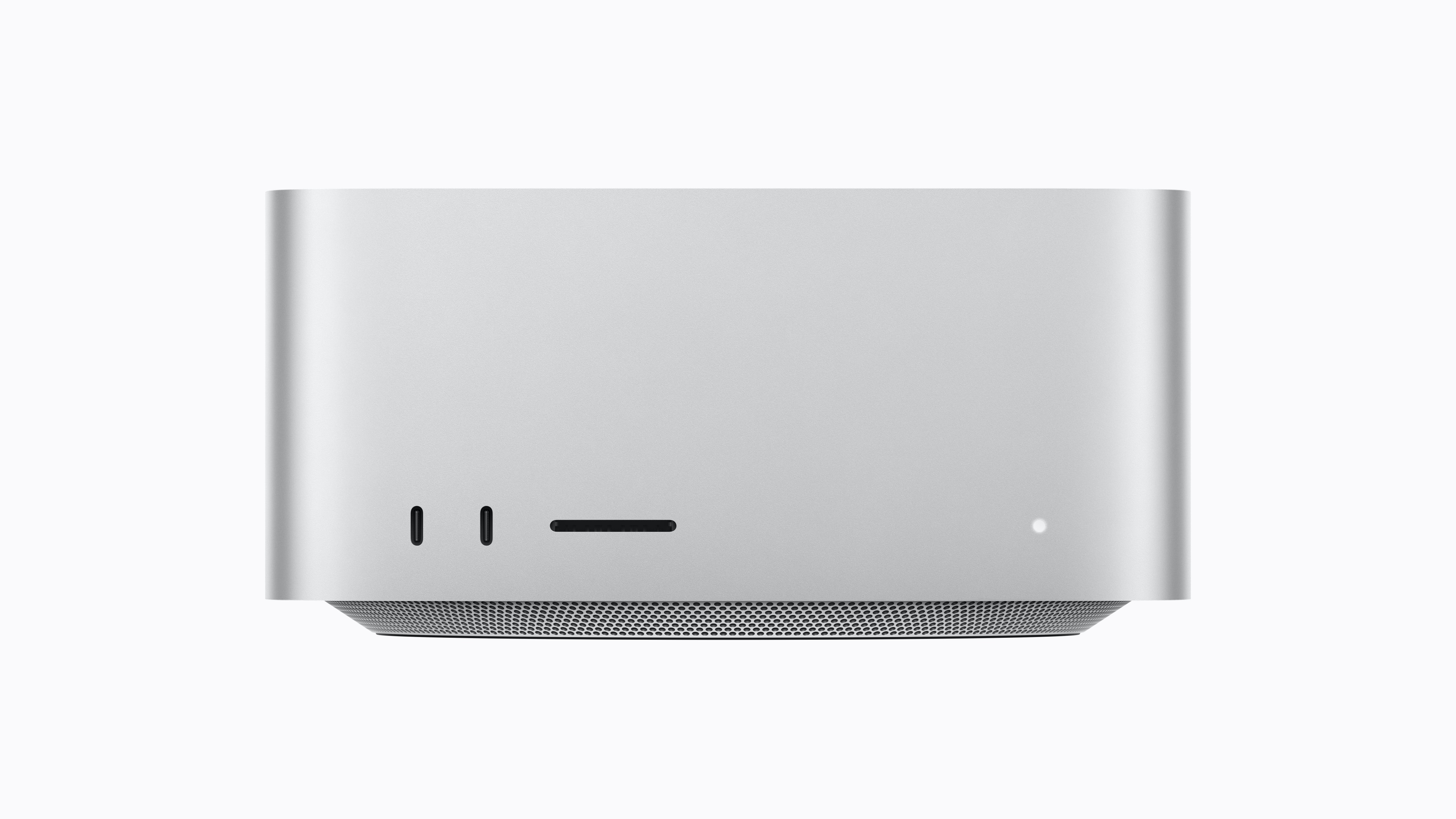
Mac Studio Takes a Major Leap in AI Performance
AI performance is one of the biggest upgrades to the new Mac Studio.
Across the new generation, Apple claims up to 4.3x faster AI performance, 1.8x faster graphics, 2x faster storage and 1.3x faster CPU performance, depending on the configuration and comparison.
A major part of that increase comes from Neural Accelerators integrated directly into each GPU core, dramatically increasing performance for AI workloads such as large language models, image generation and machine learning.
At the top end, M5 Ultra can be configured with 512GB of unified memory and delivers an enormous 1.2TB/s of memory bandwidth, 50% higher than before.
This allows extremely large AI models to run entirely locally rather than relying on cloud infrastructure, giving professionals greater privacy while eliminating token limits and cloud-compute costs.
Mac Studio with M5 Max
The new M5 Max is designed for professionals including developers, filmmakers, photographers, musicians and 3D designers who need workstation-class performance without moving to Apple’s most extreme configuration.
M5 Max features an 18-core CPU alongside an up to 40-core GPU.
The GPU is up to 50% faster than the previous generation and now includes Neural Accelerators in every core, substantially improving both graphics and AI workloads.
Mac Studio with M5 Max supports up to 128GB of unified memory and offers as much as 614GB/s of memory bandwidth.
It also introduces third-generation hardware-accelerated ray tracing, improving lighting, reflections and shadows in professional 3D, VFX and game-development applications.
Its Media Engine provides hardware acceleration for H.264, HEVC, ProRes and AV1, making the M5 Max configuration particularly capable for demanding professional video workflows, including uncompressed 8K footage.
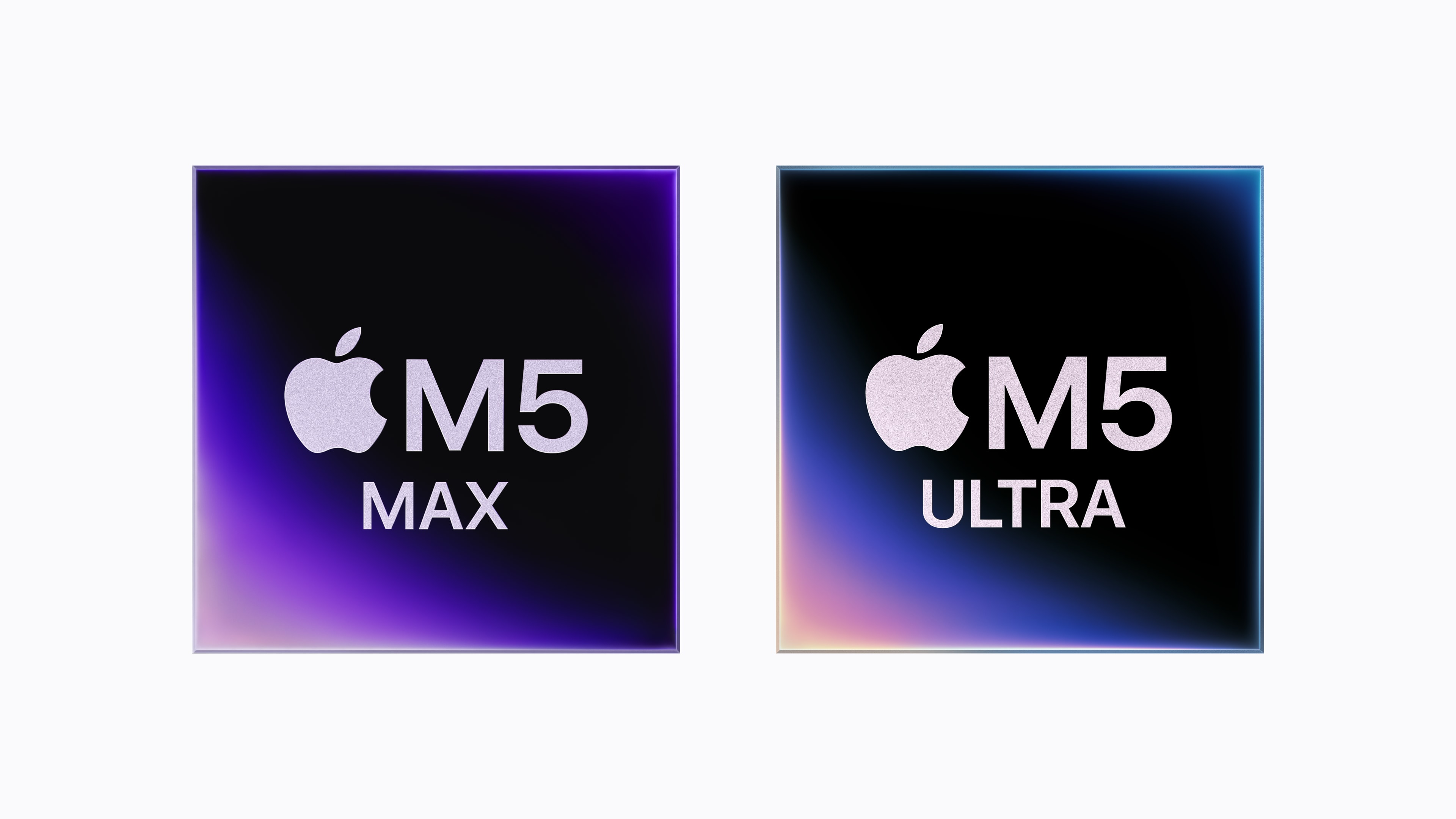
M5 Max Performance
According to Apple, Mac Studio with M5 Max delivers:
- Up to 10.7x faster LLM prompt processing in LM Studio than M1 Max and 3.9x faster than M4 Max
- Up to 7.4x faster text-to-image generation than M1 Max and up to 3.5x faster than M4 Max
- Up to 5.3x faster Magic Mask performance in DaVinci Resolve Studio than M1 Max and up to 3x faster than M4 Max
- Up to 3.5x faster DNA sequencing basecalling than M1 Max and up to 1.9x faster than M4 Max
Mac Studio with M5 Ultra
For professionals requiring Apple’s absolute highest level of desktop performance, there is the new M5 Ultra.
M5 Ultra scales to an enormous 36-core CPU and 80-core GPU, making it the most powerful Apple silicon GPU to date.
The CPU provides up to 1.3x faster multithreaded performance than M3 Ultra, while graphics performance improves by as much as 1.8x.
More importantly, Neural Accelerators arrive on the Ultra-class GPU for the first time. Apple claims this gives M5 Ultra up to 4.3x the peak AI compute performance of M3 Ultra and up to 9.8x the performance of M1 Ultra.
The chip can be paired with up to 512GB of unified memory and 1.2TB/s of memory bandwidth.
That combination makes Mac Studio particularly interesting for AI researchers, developers, VFX professionals and data scientists working with extremely large datasets and models.
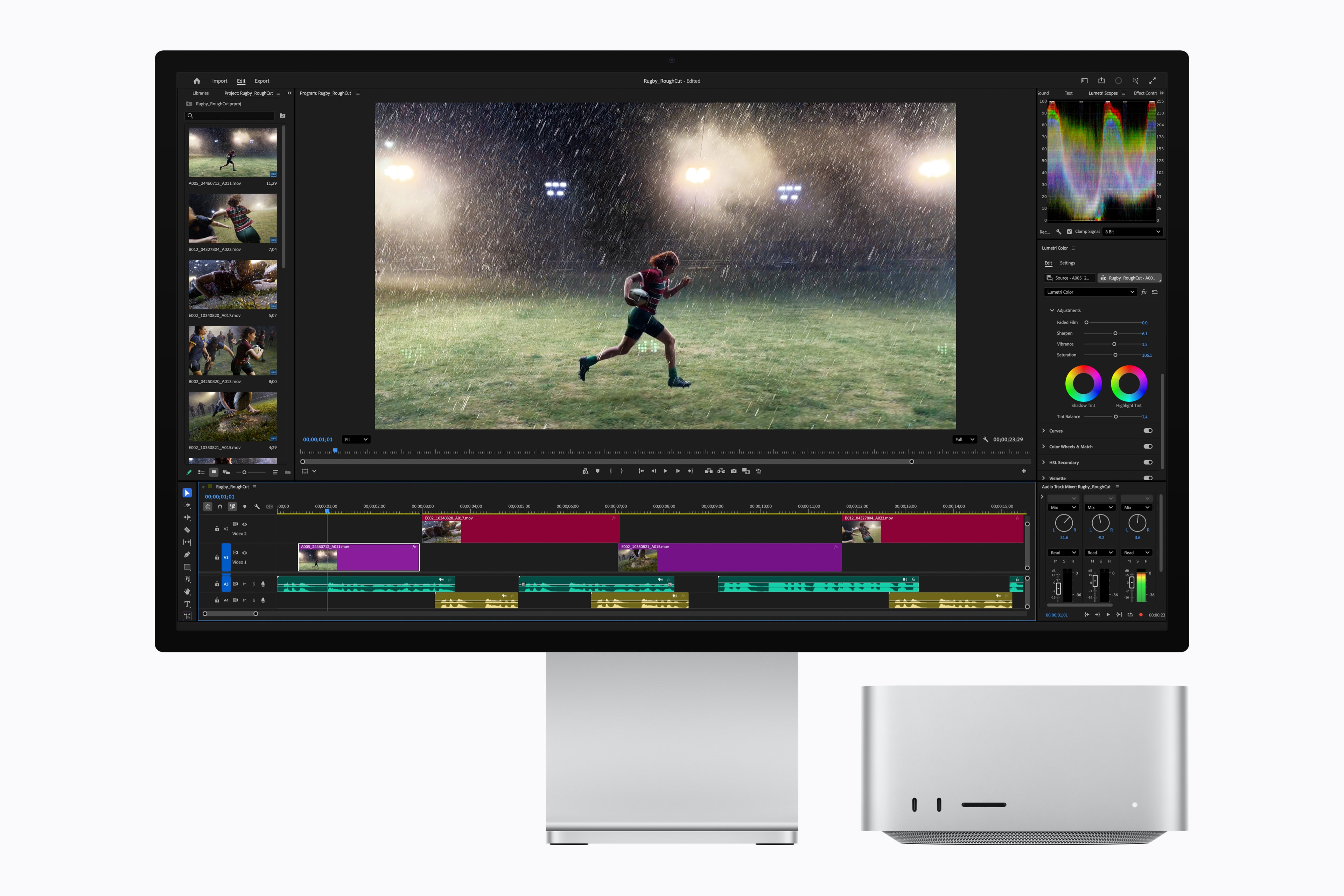
An Extreme Video Workstation
M5 Ultra also doubles the video encode and decode blocks available on M5 Max.
As a result, Apple says the new Mac Studio can simultaneously play as many as 33 streams of 8K ProRes 422 video at 30fps.
This gives professional filmmakers the ability to work with large multicamera productions, uncompressed 8K footage and complex color-grading workflows from a single compact workstation.
M5 Ultra Performance
Apple claims Mac Studio with M5 Ultra delivers:
- Up to 15.4x faster CopyCat ML training in Foundry Nuke than M1 Ultra and up to 3.3x faster than M3 Ultra
- Up to 9.8x faster LLM prompt processing in LM Studio than M1 Ultra and up to 4x faster than M3 Ultra
- Up to 8.2x faster text-to-image generation than M1 Ultra and up to 4.3x faster than M3 Ultra
- Up to 4.7x faster Redshift scene rendering than M1 Ultra and up to 1.7x faster than M3 Ultra
Multiple Mac Studios Can Now Work Together
One of the more interesting capabilities of the new Mac Studio is the ability to cluster multiple machines together using Thunderbolt 5 and RDMA.
Rather than treating every Mac as an isolated system, professionals can combine their compute resources and create a much larger shared memory pool.
This is particularly useful for running extremely large open-weight AI models that might otherwise exceed the capabilities of a single machine.
According to Apple, a cluster of four Mac Studio systems can deliver up to 3x faster distributed AI inference than a single Mac Studio.
It effectively transforms Mac Studio from an individual workstation into a scalable local AI computing platform.
Thunderbolt 5 and Faster Storage
Mac Studio also receives substantial connectivity improvements.
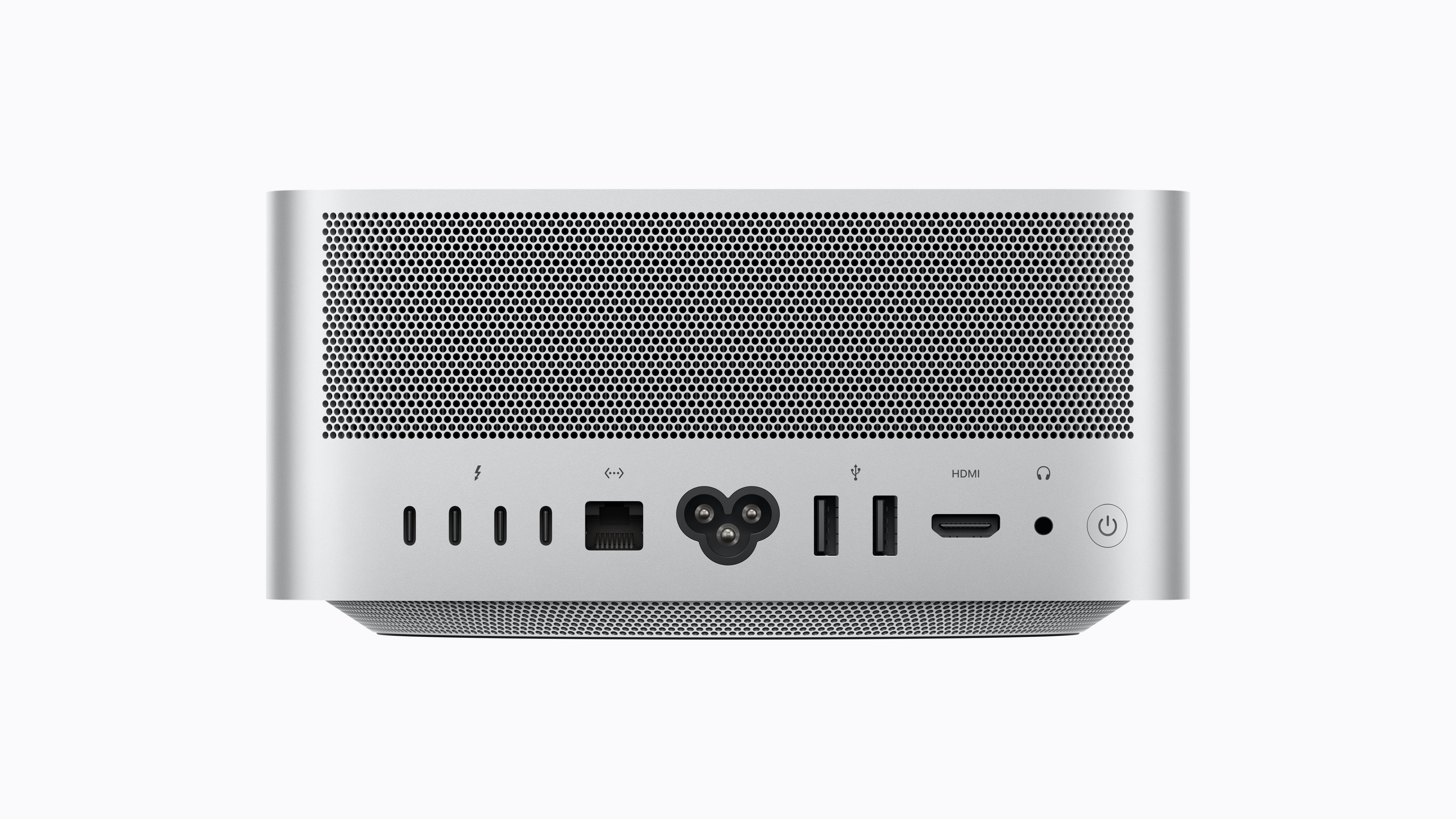
Thunderbolt 5 offers up to 120Gb/s of bandwidth, allowing professionals to connect high-speed external SSDs, PCIe expansion chassis, displays, docks and other professional hardware.
Internal storage performance is also up to twice as fast, thanks to a new SSD architecture based on PCIe Gen 6.
That additional performance should be especially beneficial when transferring enormous media projects or loading large AI models into memory.
Wi-Fi 7 and Bluetooth 6 Arrive
Apple’s new N1 wireless chip brings Wi-Fi 7 and Bluetooth 6 to Mac Studio for the first time.
The machine also gains genlock support through USB-C, allowing displays and professional cameras — including the iPhone 17 Pro — to be precisely synchronized.
Mac Studio can drive as many as eight displays simultaneously, or up to four Studio Display XDR monitors at full 5K resolution and 120Hz.
Built for Local AI
Apple is increasingly positioning Mac Studio as more than a traditional creative workstation.
With hundreds of gigabytes of unified memory available directly to the CPU, GPU and Neural Engine, Mac Studio can run exceptionally large AI models locally.
The M5 Ultra configuration is particularly significant. With 512GB of unified memory, professionals can work with models that would normally require expensive cloud infrastructure or specialized AI servers.
Apple is also expanding its software ecosystem around this hardware.
The new Core AI framework is designed to help developers build, run and deploy AI models specifically optimized for Apple silicon, while Apple’s open-source MLX framework supports running, training and fine-tuning machine-learning models directly on Mac.
Combined with Xcode, Mac Studio is increasingly becoming an end-to-end machine for developing, testing and deploying AI applications.
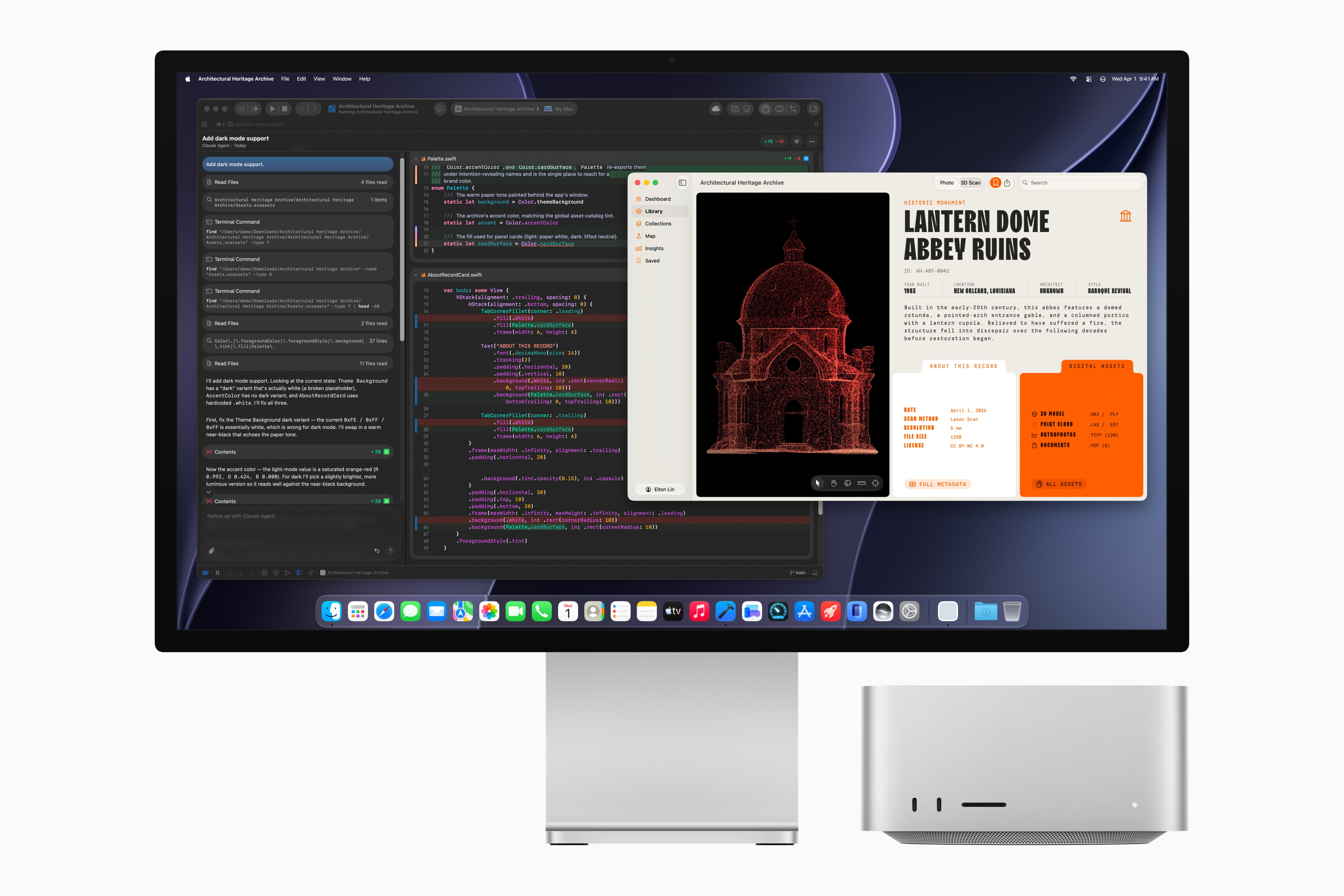
macOS 27 Golden Gate
The new Mac Studio will run macOS 27 Golden Gate, bringing the next generation of Apple Intelligence and the new Siri AI.
Siri AI can use personal context across messages, emails and photos, perform actions across applications and understand information currently displayed on the user’s screen through Visual Intelligence.
Apple Intelligence also expands across Safari, Shortcuts and Photos, while macOS 27 brings further performance, search and interface improvements.
For Mac Studio users, however, the most important development is how closely macOS is becoming integrated with Apple’s increasingly powerful local AI hardware.
More Recycled Materials
The new Mac Studio is manufactured using 35% recycled content overall, including 100% recycled aluminum in its enclosure and 100% recycled rare earth elements in its magnets.
Apple says 40% of the energy used to manufacture Mac Studio comes from renewable sources, while its packaging is now entirely fiber-based.
Pricing and Availability
The new Mac Studio with M5 Max starts at $2,499, or $2,299 with U.S. education pricing.
The flagship Mac Studio with M5 Ultra starts at $5,499, or $5,099 with education pricing.
Pre-orders begin August 25, with deliveries and in-store availability starting September 22.
Configurations featuring the maximum 512GB of unified memory will become available in late October.
With an up to 80-core GPU, 512GB of unified memory, Thunderbolt 5, dramatically faster local AI processing and the ability to cluster multiple systems together, the new Mac Studio pushes Apple’s compact workstation into an entirely new category — one designed as much for the rapidly growing world of local AI as it is for traditional professional creative workflows.
Last updated: Oct 14, 2026