
Apple Unveils new Mac mini with M6 and M5 Pro
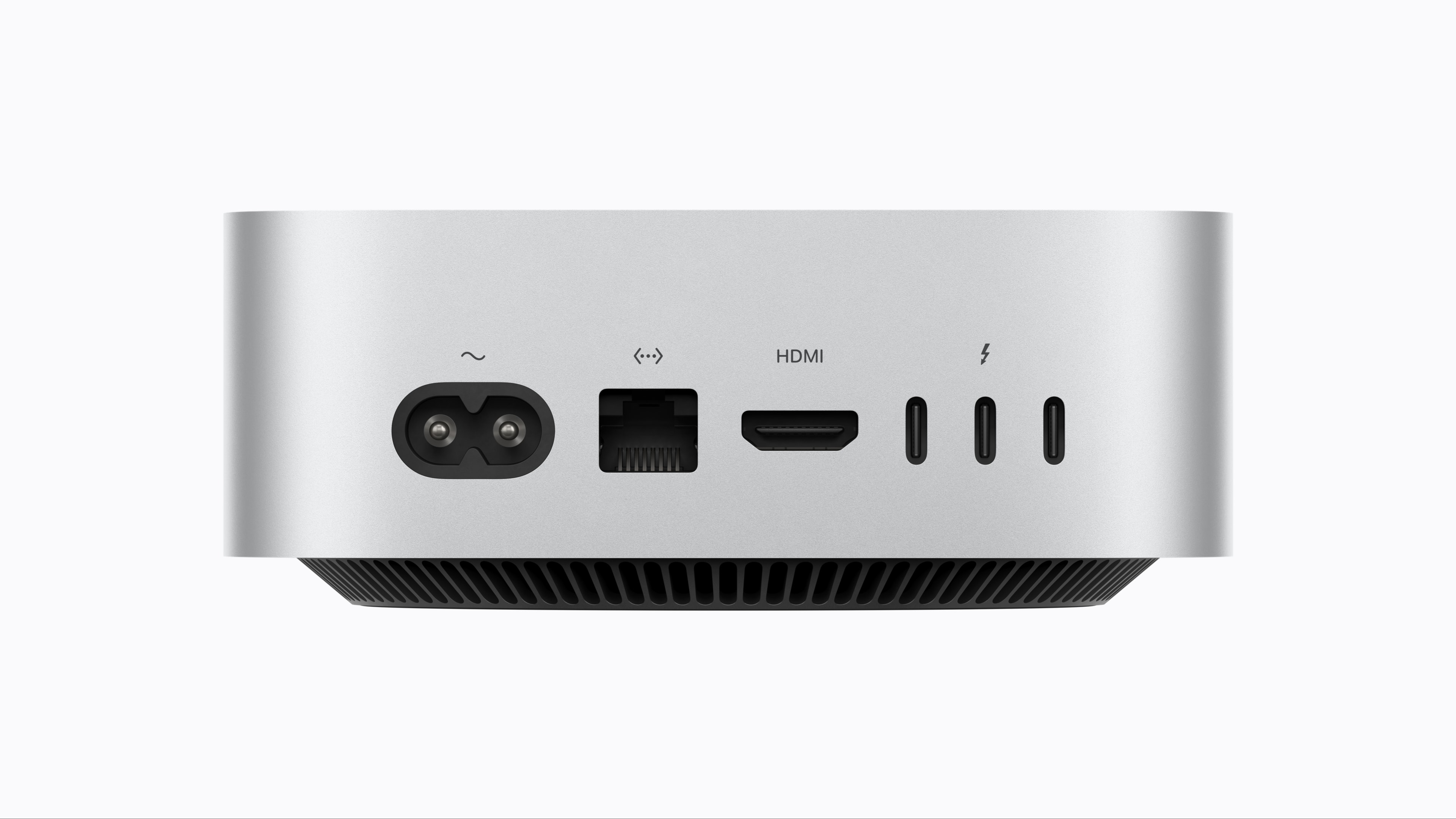
Apple has introduced the next generation of Mac mini, powered by the new M6 and M5 Pro chips. While its remarkably compact design remains unchanged, the new Mac mini delivers a substantial jump in CPU, graphics and AI performance, alongside faster storage and upgraded connectivity.
The Mac mini with M6 starts at $899, while the more powerful M5 Pro model starts at $1,699. Pre-orders open August 25, with availability beginning September 22.
Mac mini with M6: A Major Performance Upgrade
The new M6 represents one of the biggest performance upgrades yet for Apple’s smallest desktop.
Apple says Mac mini with M6 delivers:
- Up to 4x faster AI performance compared with M4
- Up to 2x faster graphics
- Up to 2x faster storage
- Up to 40% faster CPU performance
At the heart of M6 is a new 12-core CPU, featuring two additional CPU cores compared with the previous generation. It is paired with a 12-core GPU, which also gains two additional cores.
For the first time on Mac mini, Apple has integrated Neural Accelerators into every GPU core, significantly increasing performance for AI-focused workloads.
The M6 also introduces a new Dual 16-core Neural Engine, delivering up to twice the performance of the previous generation.
Mac mini with M6 comes standard with 16GB of unified memory, configurable up to 32GB, while memory bandwidth increases to 170GB/s.
M6 Performance
Compared with previous Mac mini generations, Apple claims the M6 model delivers:
- Up to 13.5x faster LLM prompt processing in LM Studio than M1 and up to 4.8x faster than M4
- Up to 2.3x faster Excel calculations than M1 and up to 1.5x faster than M4
- Up to 2x faster ray-traced gaming performance in Cyberpunk 2077: Ultimate Edition compared with M4
The combination makes the M6 Mac mini particularly well suited to productivity, creative applications, gaming and increasingly demanding local AI workloads.
Mac mini with M5 Pro: Serious Power in a Tiny Desktop
For users requiring considerably more performance, Apple is offering the Mac mini with M5 Pro.
The M5 Pro can be configured with an 18-core CPU and 20-core GPU, positioning the Mac mini for demanding professional workloads including video production, software development, 3D rendering, VFX and scientific simulations.
Its GPU features an enhanced shader architecture, third-generation ray tracing and Neural Accelerators integrated into every GPU core.
Memory also receives a substantial upgrade. M5 Pro supports up to 64GB of unified memory with 307GB/s of memory bandwidth.
That additional capacity allows the Mac mini to handle larger local AI models, complex 3D projects, ProRes RAW workflows and large research datasets while maintaining the efficiency and quiet operation associated with Apple silicon.
M5 Pro Performance
Apple claims the M5 Pro Mac mini delivers:
- Up to 8.5x faster LLM prompt processing in LM Studio than M2 Pro and up to 4x faster than M4 Pro
- Up to 4.5x faster ray-traced rendering in Blender than M2 Pro and up to 1.4x faster than M4 Pro
- Up to 2.1x faster image processing in Affinity than M2 Pro and up to 1.5x faster than M4 Pro
Faster Connectivity Across Both Models
Apple has also significantly upgraded Mac mini’s wireless and wired connectivity.
Both the M6 and M5 Pro models now support Wi-Fi 7 and Bluetooth 6, alongside 2.5Gb Ethernet as standard. A 10Gb Ethernet configuration remains available for users requiring even faster networking.
The front of the Mac mini includes:
- Two USB-C ports with USB 3 support
- A 3.5mm headphone jack with high-impedance headphone support
Around the back, both models include HDMI and Ethernet, but their Thunderbolt configurations differ.
The M6 Mac mini features three Thunderbolt 4 ports, while the M5 Pro model receives three Thunderbolt 5 ports.
Thunderbolt 5 also enables multiple Mac mini systems to be clustered together for demanding workloads such as running large AI models locally.
Apple has additionally introduced genlock support through USB-C, allowing precise synchronization between cameras and displays, including the iPhone 17 Pro.
Designed for Local and Agentic AI
AI is one of the central themes of this Mac mini generation.
The combination of faster Neural Engines, GPU-based Neural Accelerators and increased memory bandwidth allows both machines to process considerably more AI workloads directly on-device.
Apple is specifically positioning Mac mini as an always-on desktop for AI agents, alongside its traditional roles as a home computer, professional workstation and compact server.
The M5 Pro configuration takes this further with up to 64GB of unified memory and Thunderbolt 5, making it possible to tackle significantly larger local AI models and even combine multiple Mac minis for more demanding workloads.
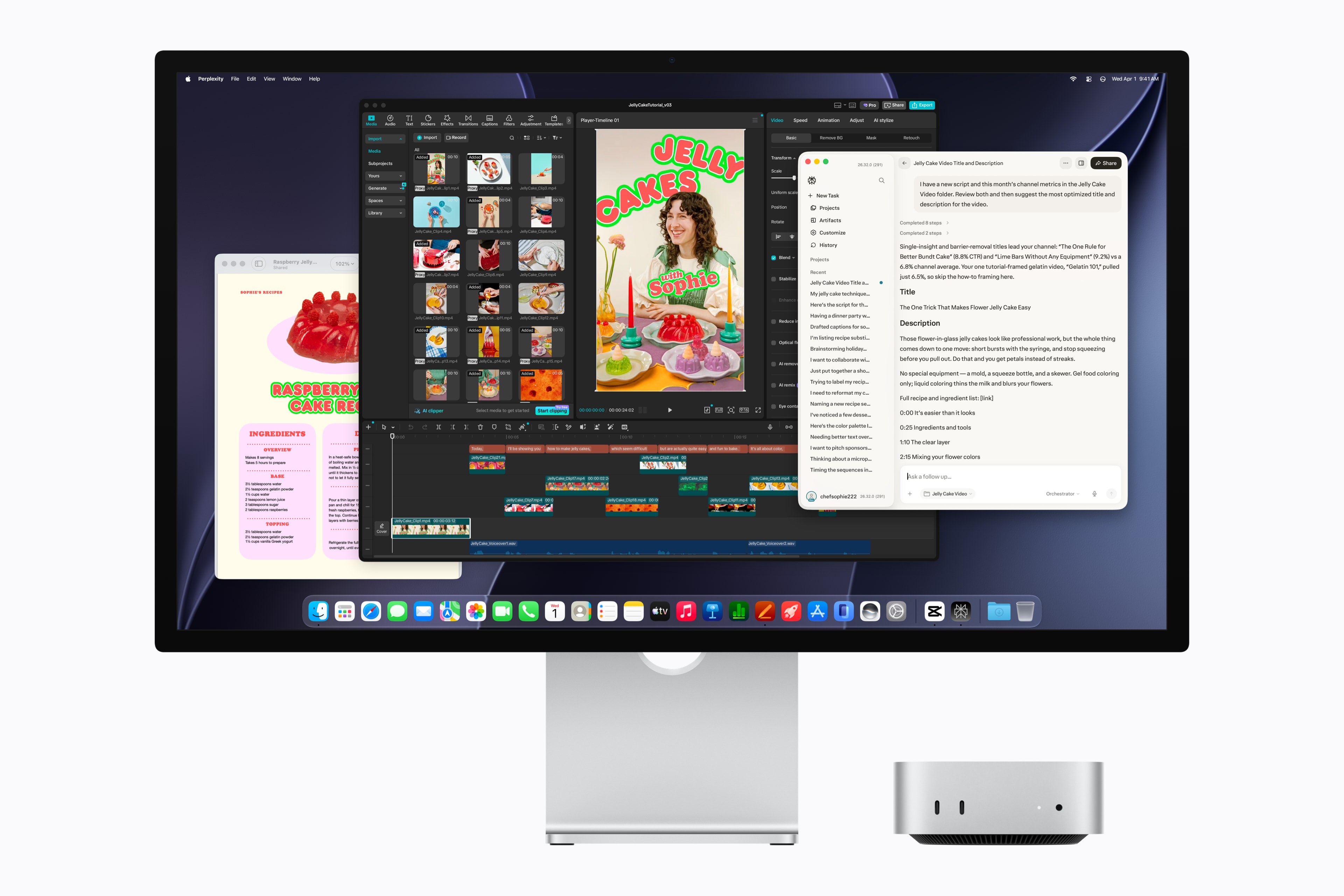
macOS 27 Golden Gate
Both Mac mini models are designed around macOS 27 Golden Gate and the next generation of Apple Intelligence.
The software introduces Apple’s new Siri AI, deeper systemwide AI integration and improvements across apps such as Safari, Shortcuts and Photos.
Siri AI can use personal context across messages, emails and photos, interact with content currently displayed on screen through Visual Intelligence, perform actions across apps and assist users directly within Spotlight and systemwide menus.
Combined with the additional AI hardware inside M6 and M5 Pro, Apple is clearly positioning the new Mac mini as one of its most capable machines for running AI workloads locally.
More Recycled Materials
Apple says the new Mac mini is made with 50% recycled material overall, including 100% recycled aluminum in its enclosure and 100% recycled rare earth elements in its magnets.
Its packaging is also entirely fiber-based, while renewable electricity is used throughout the manufacturing process.
Pricing and Availability
The Mac mini with M6 starts at $899, or $799 with U.S. education pricing.
The more powerful Mac mini with M5 Pro starts at $1,699, or $1,599 with education pricing.
Both models are available to pre-order from August 25, with deliveries and in-store availability beginning September 22.
With significantly faster CPU and graphics performance, a major increase in AI capabilities, Wi-Fi 7, faster Ethernet and up to Thunderbolt 5, Apple has managed to substantially upgrade the Mac mini without changing the compact formula that has made it one of the company’s most versatile Macs.
Last updated: Oct 14, 2026