
Apple’s Biggest Software Shake-Up Yet? iOS 27 and Golden Gate Redefine the Future of the Ecosystem
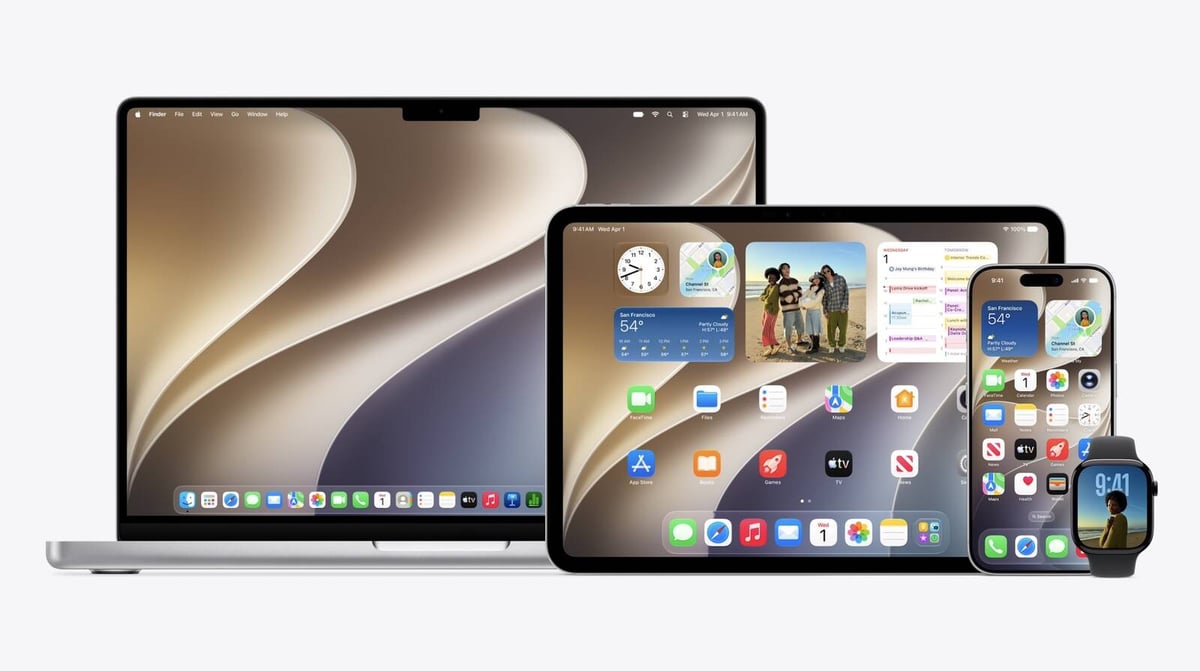
Apple’s next generation of software updates isn’t just about new features. Across the iPhone, iPad, Mac, Apple Watch, Apple TV, and Vision Pro, Apple is making some of its boldest platform decisions in years. While millions of users will gain access to powerful new AI tools, many older devices are reaching the end of the road.
From a completely redesigned Siri experience to major compatibility changes, here’s everything that stands out in Apple’s software lineup for 2027.
Siri Becomes the New Center of Apple’s Experience
For years, Spotlight Search has been the primary way users quickly access apps, files, and information. That’s changing.
Apple is replacing the traditional Spotlight experience with a new “Search or Ask” interface powered by Siri AI. Instead of simply searching through content, users can now ask questions, generate text, complete tasks, and interact with their devices more naturally.
The assistant is also becoming significantly more personal. When composing messages or emails, Siri can adapt its tone based on how users typically communicate, helping create responses that feel more natural and consistent with their own writing style.
The change represents Apple’s strongest push yet toward making AI the primary way people interact with their devices.
Apple Intelligence Expands Across Every Major Platform
Artificial intelligence is no longer limited to a handful of features.
Apple Intelligence now powers smarter Writing Tools, enhanced message composition, and context-aware communication suggestions. The system can learn how users interact with different contacts and adjust recommendations accordingly.
Creative features are receiving major upgrades as well. Genmoji now allows users to modify existing creations through simple text prompts, generate new characters from photos, or even create entirely new designs based on existing emojis.
Image Playground is also evolving with support for multiple image formats and significantly improved image generation capabilities, including more realistic outputs suitable for wallpapers, profile images, and social media content.
Meanwhile, Visual Intelligence continues to grow beyond the iPhone. The feature is expanding to Mac and iPad, allowing users to extract information from images, scan business cards, and even create multiple calendar events from a single photograph.
iPhone Users Get the Most Compatible Update Yet
Despite introducing some of the platform’s biggest AI upgrades, Apple is keeping compatibility surprisingly broad.
iOS 27 supports the exact same iPhone lineup as iOS 26, including the iPhone 11 series and the second-generation iPhone SE. This gives iOS 27 one of the largest compatibility lists in the history of the iPhone.
For users with older devices, this means another year of access to the latest software without needing to upgrade their hardware.
Notifications Receive a Major Redesign
One of the most noticeable visual changes in iOS 27 is the way notifications behave.
Instead of appearing from the top of the display, notifications now slide in from the left side of the screen. Notification Center has also moved, requiring users to swipe down from the top-left corner.
This redesign frees up the center swipe gesture, allowing Apple to dedicate it to launching Siri’s new AI interface.
Additional interface improvements include larger widgets, live widget updates while apps remain open, redesigned sidebar icons, and improved audio handling for web content.
The Mac Officially Says Goodbye to Intel
While iPhone users are enjoying broader support, Mac users are seeing the opposite trend.
macOS Golden Gate officially ends support for Intel-based Macs, completing Apple’s multi-year transition to Apple Silicon. Several previously supported Macs, including select MacBook Pro, iMac, and Mac Pro models, will no longer receive the latest operating system.
Golden Gate also marks the final chapter for Rosetta 2. Apple’s translation technology, which allowed Intel applications to run on Apple Silicon Macs, receives its last full implementation in this release.
Moving forward, developers will be expected to fully embrace native Apple Silicon software.
iPad Compatibility Tightens
Apple is also becoming more selective with iPad support.
iPadOS 27 now requires either an A14 Bionic processor or an M-series chip, removing support for several older iPad, iPad mini, iPad Air, and iPad Pro models.
At the same time, the platform gains several productivity-focused upgrades, including a persistent menu bar option, larger widgets, improved multitasking tools, and expanded Apple Pencil integration.
The Notes app receives one of the most impressive additions: an Image Wand feature capable of transforming rough sketches into realistic images.
Apple Watch Faces Its Largest Compatibility Cut Ever
No platform experiences bigger compatibility changes than Apple Watch. Something many didn’t talk about.
watchOS 27 removes support for multiple generations of Apple Watch hardware in a single release, including the Series 6, Series 7, Series 8, first-generation Ultra, and second-generation SE.
Only Apple’s newest smartwatch lineup remains supported.
While the compatibility changes are significant, Apple is introducing several new features, including improved step tracking, smarter Smart Stack recommendations, and a redesigned Find My experience.
One surprising change is the apparent removal of the Walkie-Talkie app, which disappears entirely from the first developer beta.
Apple TV and Vision Pro Continue to Evolve
Apple TV users are receiving meaningful upgrades despite relatively small hardware changes.
tvOS 27 introduces a redesigned Podcasts app, support for Hi-Res Lossless audio in Apple Music, and local processing for HomeKit Secure Video, improving privacy and performance.
Meanwhile, visionOS 27 pushes spatial computing further by allowing users to activate Siri simply by looking at its interface. The platform also introduces redesigned controls and more immersive curved window layouts.
Conclusion
Apple’s 2027 software cycle feels less like a traditional update and more like a transition into a new era. The company is clearly betting that artificial intelligence will become the foundation of its ecosystem, with Siri moving from a simple voice assistant to the center of the user experience.
At the same time, Apple is accelerating its hardware strategy by leaving Intel behind, tightening compatibility requirements on iPad and Apple Watch, and building future features around its latest chips.
From an my perspective, the biggest story isn’t the redesigned notifications or even the new AI tools. It’s Apple’s confidence. For the first time in years, Apple appears willing to make aggressive platform decisions in order to push its ecosystem forward. Whether users love every change or not, one thing is becoming clear: Apple is no longer preparing for an AI-powered future, it believes that future has already arrived.
Last updated: Oct 14, 2026